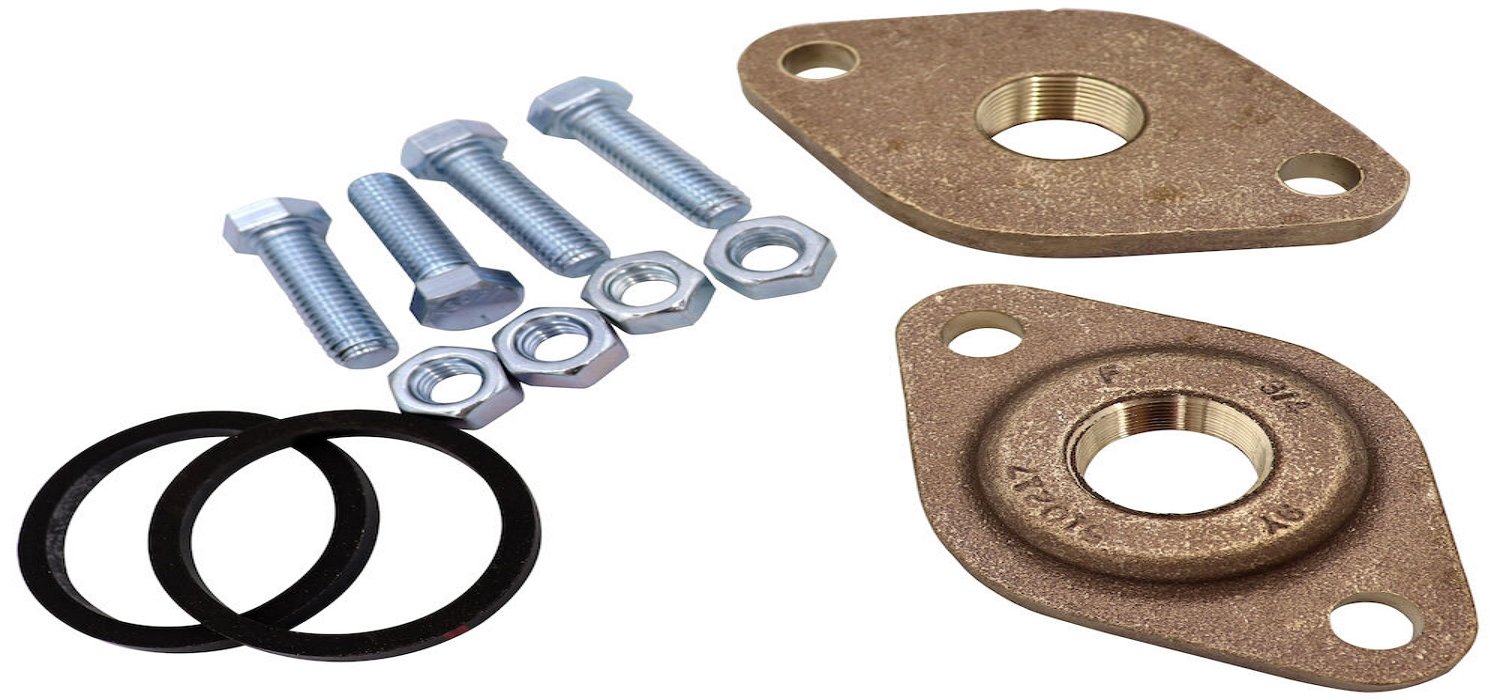
Gunmetal flanges are fittings used to connect pipes, valves, and other equipment in a piping system. Made from a copper-tin-zinc alloy, gunmetal is prized for its high durability, strength, and corrosion resistance, especially in marine and industrial environments.
Types of gunmetal flanges
Gunmetal flanges are available in several common types, each designed for a specific application:
- Slip-on flanges: These are fitted over the pipe and are typically double-welded on the inside and outside. They are used for lower pressure and temperature applications.
- Weld neck flanges: Featuring a long, tapered hub, these are welded directly to the pipe. This design provides reinforcement for use in high-pressure and high-temperature systems.
- Blind flanges: These are solid discs used to block off a section of pipe or a vessel opening.
- Threaded flanges: These have threads machined inside the bore to connect with a matching male thread on the pipe. They are useful in applications where welding is not feasible, such as utility lines.
- Lap joint flanges: Used with stub-end fittings, these consist of a loose backing flange that can be rotated for easy alignment with the corresponding flange. They are ideal for systems that require frequent dismantling for inspection or maintenance.
Key properties and applications
Gunmetal flanges are chosen for their robust properties, which make them suitable for a wide range of demanding industries:
- Corrosion resistance: They offer strong resistance to corrosion from saltwater and various chemicals, making them ideal for marine environments, offshore platforms, and chemical processing plants.
- High durability and strength: The alloy provides good tensile strength and wear resistance, ensuring a long service life, even in heavy-duty applications.
- Pressure and temperature resistance: Gunmetal can withstand high-pressure and high-temperature environments, ensuring reliable and leak-proof connections.
- Leak prevention: When properly installed with the correct gaskets, flanges provide tight seals that prevent leaks in the piping system.
- Easy maintenance: Unlike welded joints, flanges can be easily assembled and disassembled, which simplifies inspection and repair.