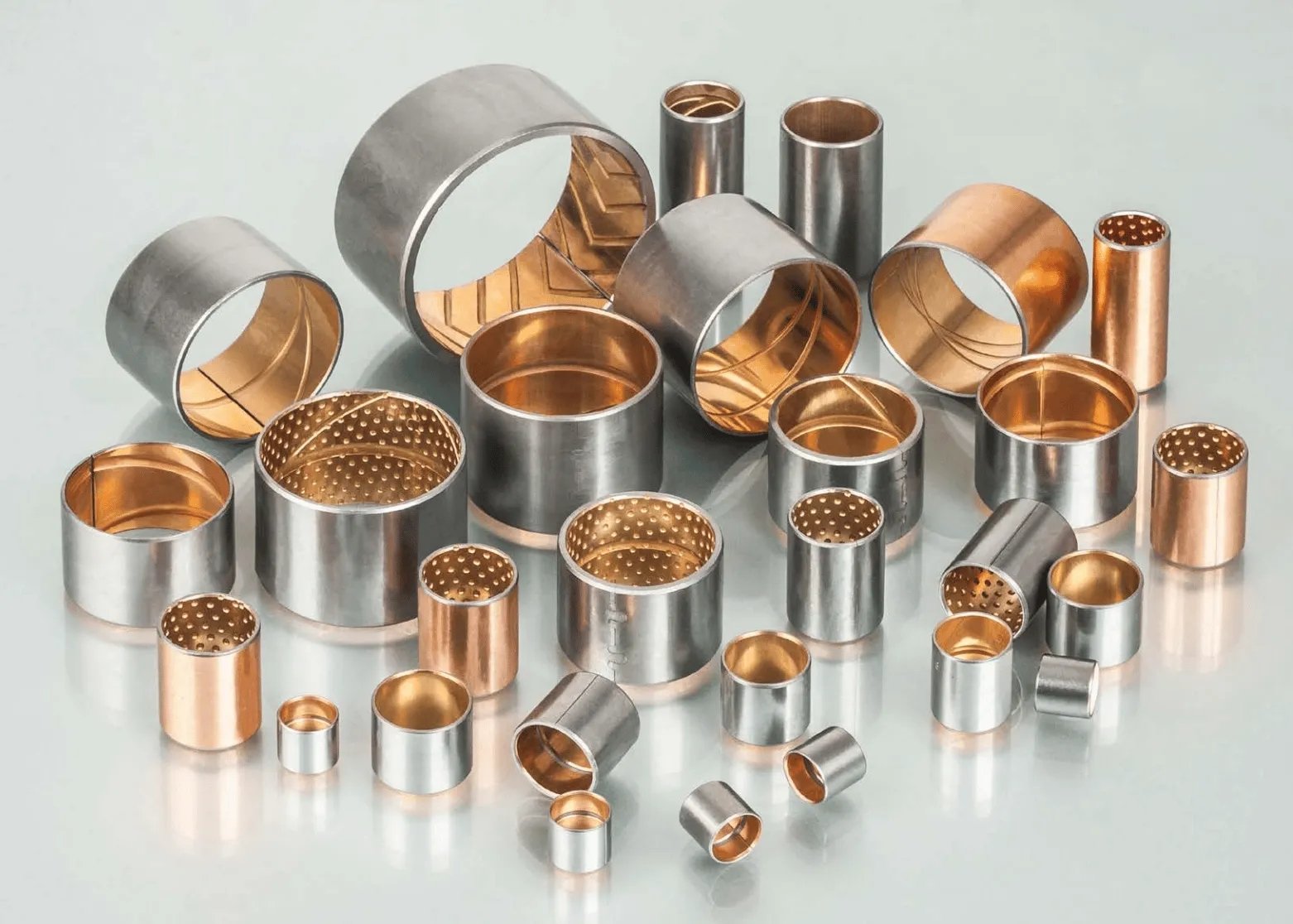
A collar bush, or flanged bushing, is a cylindrical mechanical component with a flange on one end. It is designed to fit around a shaft to support, guide, and provide a low-friction surface for rotating or sliding parts. The flange prevents axial movement and helps the bush absorb thrust loads.
Common types and materials
- Split collar bushings: Also known as two-piece bushings, these have a split along their circumference for easy installation and removal without disassembling the shaft. They are often used in conveyor systems and power transmission equipment.
- Rigid collar bushings: Solid, one-piece bushings that provide maximum stability and are suitable for heavy-duty applications with high torque or axial loads.
- Set screw collar bushings: Secured to a shaft with one or more set screws for precise positioning.
- Materials: Collar bushes come in a variety of materials, chosen based on the application's specific requirements for strength, friction, and environmental resistance.
- Bronze: Offers high strength, excellent wear resistance, and natural self-lubricating properties.
- Steel: Provides strong structural integrity and durability.
- Plastic (Nylon, Acetal): Features low friction and good chemical resistance, ideal for light-duty applications.
- Self-lubricating composites: These contain embedded lubricants for maintenance-free operation in harsh environments.
Common applications
Collar bushes are vital for ensuring smooth and efficient operation in a wide range of mechanical systems, both industrial and domestic.
- Industrial machinery: They are used in equipment like pumps, gearboxes, presses, and conveyor systems to reduce friction, absorb vibration, and enhance performance.
- Automotive industry: Found in vehicle components, such as suspension systems and transmissions, to reduce metal-to-metal contact, noise, and vibration.
- Heavy equipment: Excavators and other heavy machinery use robust collar bushes, often made of steel or bronze, to support moving parts like hydraulic cylinders and boom arms.
- Material handling: Flanged collar sleeve bushes ensure stability and axial positioning in equipment like pallet trucks and stackers.
- Household appliances: They support rotating shafts in appliances like washing machines and blenders.
- Robotics: Provide precise movement and positioning for automated systems.
Installation methods
For installation, the method depends on whether you are removing an old bush or fitting a new one.
- Using a press: A hydraulic or arbor press provides the most controlled and even force for installation.
- DIY methods: You can install a bushing without a press by using a shoulder bolt, washers, and nuts to draw the new bush into place. Ensuring proper alignment and using a lubricant is key to preventing damage.
- Proper lubrication: For some materials like polyurethane, it is critical to apply a suitable lubricant to both the bush and its housing before installation to ensure a smooth fit.